Currently 90% of people who suffer out-of-hospital cardiac arrests die, in part because they do not receive CPR more than half of the time. I was almost one of them—until a rapid chain of actions snapped into place, from a 911 dispatcher’s coaching to Hands-Only CPR, EMS care and hospital treatment.
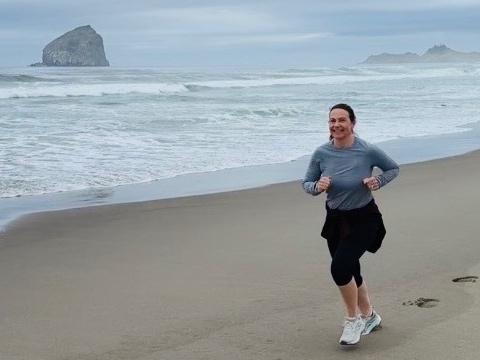
In 2020, early in the COVID-19 pandemic, I set out for a six-mile run with a friend. I began to feel unusually tired and unwell, so we cut the run short. Back home, I lay down. Moments later, my husband, Brett Kadz, heard a noise from the bedroom and found me unconscious.
Brett called for our son, Sam, to dial 911. The dispatcher stayed on the line, gave clear, step-by-step instructions and coached Brett through moving me to the floor and starting Hands-Only CPR until paramedics arrived. The 911 operator, who remained calm and encouraging, was one of the most critical links in my survival.
When EMS arrived, the team quickly took over resuscitation and moved me to the ambulance. Our neighborhood watched as fire trucks and an ambulance filled the cul-de-sac—while my husband, unable to ride along because of COVID restrictions, waited for news.
My experience is a powerful example of the American Heart Association’s Nation of Lifesavers movement—helping more people recognize cardiac arrest, call 911, start Hands-Only CPR and support systems of care so more families get a second chance.
I spent three days in an induced coma in intensive care, then remained hospitalized for recovery and placement of an implantable cardioverter defibrillator (ICD). Doctors determined I had experienced ventricular fibrillation (VFib) associated with a prolonged QT interval—an electrical problem that can cause the heart to suddenly stop. I had a strong, healthy heart. It was just an electrical issue.
A heart attack is usually a “plumbing” problem caused by a blocked artery. Cardiac arrest is an “electrical” problem—when the heart suddenly stops beating effectively.
I often reflect on the chain of survival—the coordinated sequence that increases the odds of surviving cardiac arrest: recognizing an emergency, calling 911, starting CPR, delivering early defibrillation when available, and receiving rapid advanced care and post–cardiac arrest treatment. All the things that had to happen for me to survive happened. There were so many links—and some barriers along the way.
While bystanders and dispatchers are critical early links, survival also depends on what happens next. Through the American Heart Association’s Get With The Guidelines® quality improvement programs, hospitals and EMS teams use evidence-based protocols and data to strengthen resuscitation, stabilize patients and deliver timely post–cardiac arrest care. That includes coordinating regional systems so patients can be transported to facilities equipped to provide the level of care they need—such as advanced cardiac and neurologic support after cardiac arrest.
I am sharing my story through the Association to encourage families to learn Hands-Only CPR and to support community and health care systems that help more people survive.
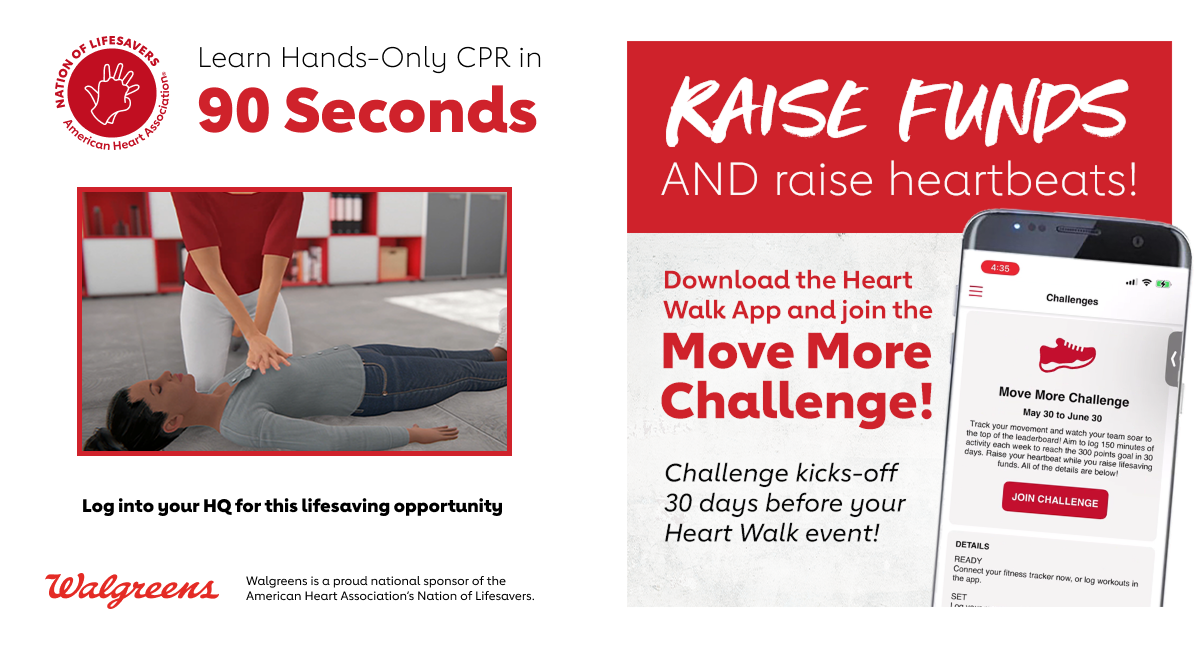
The American Heart Association encourages everyone to learn Hands-Only CPR: call 911, push hard and fast in the center of the chest and keep going until help arrives. By growing a Nation of Lifesavers and strengthening the chain of survival—from home and workplace to ambulance and hospital—more communities can help turn cardiac arrest from a tragedy into a survival story.